The story
Before 1955 nobody knew: it looked like an ordinary plaster Buddha until the fall cracked it open.
The temple, once called Wat Sam Chin, took its present name in 1940 and became a second-class royal temple in 1956.
WATSAMPHANTHAWONG
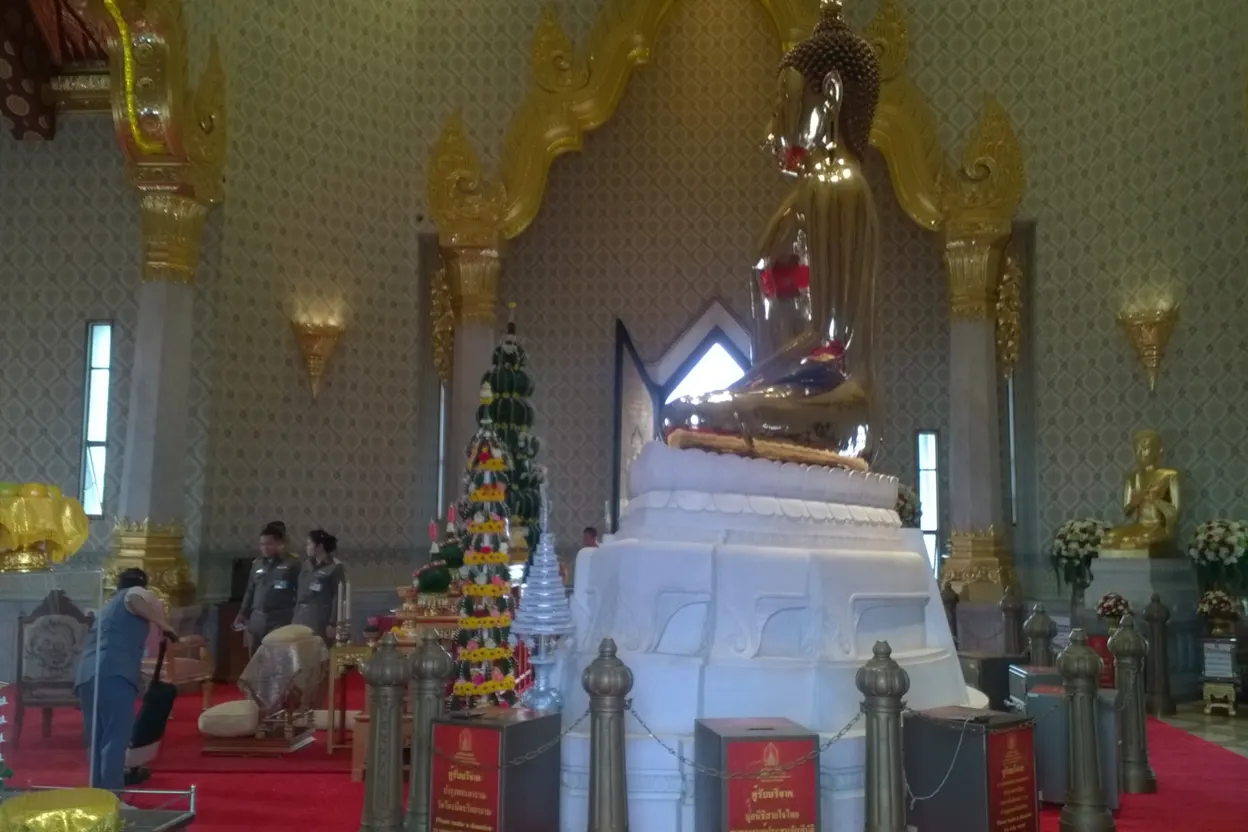
The 5.5-tonne solid gold Buddha at the east end of Chinatown, on the top floor of a white marble hall. Go in the afternoon and walk on into Yaowarat.
Every day · Review-based
THIS WEEK
Usual days, with holidays and alcohol ban days. Not a promise for a given day.
Checked 31 October 2026
Last checked: 31 October 2026 · ฿100 (Checking)
วัดไตรมิตรวิทยาราม
Open in Google MapsAll Bangkok templesChinatown (Yaowarat) night market
In the shrine hall on the top floor. Sukhothai style, usually dated to the 13th–14th century.
The ropes broke while it was being moved, the statue fell, and the plaster chipped to show gold underneath. The exhibition floor below tells the story.
It was covered in plaster, probably before Ayutthaya fell in 1767, so that no one would steal it.
The shrine hall sits on top; below are the Golden Buddha exhibition and the Chinatown Heritage Centre (the museum ticket).
Listed as the sacred object with the highest intrinsic value.
Before 1955 nobody knew: it looked like an ordinary plaster Buddha until the fall cracked it open.
The temple, once called Wat Sam Chin, took its present name in 1940 and became a second-class royal temple in 1956.
BEFORE YOU GO
Pack a light long-sleeved top or scarf and long trousers or a long skirt; it is hot, so loose cotton works best.
You take them off at every hall door.
Ticket offices may take cards, but ferries, drinks and donation boxes are cash.